James Bond’s flat in Spectre. Apparently, it’s in Notting Hill. Also: BOOKS! BOOKS EVERYWHERE!
Source: [X]
James Bond’s flat in Spectre. Apparently, it’s in Notting Hill. Also: BOOKS! BOOKS EVERYWHERE!
Source: [X]


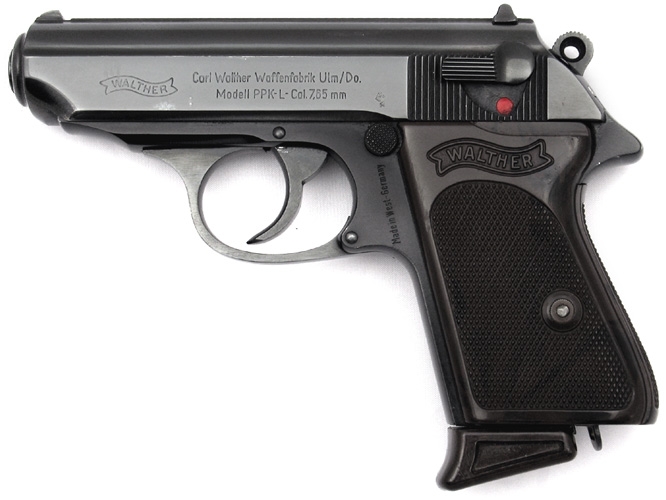
Cutaway of the Day: Walther PPK
Walther introduced their PP in 1929, it was intended for use by uniformed police officers. It was the first self loading pistol to successfully use a double action to cock and fire. It was immediately successful and a year later Walther introduced a shortened ‘K’ model, the PPK or ‘Polizei-Pistole, Kriminal’ – sometimes also called the ‘Polizei-Pistole, Kurz (short) or Kleine (small)’, which was just under an inch shorter.
Walther PP
The PPK has a slightly shorter frame which adds to the streamlined look of the PP, it’s a shape which has been widely copied since the end of the Second World War. The PP’s shape could be said to have been influenced by Browning’s FN M1910 which were actually copied by DWM and Rheinmetall in the 1920s.
FN M1910
Originally chambered in 7.65mm (.32ACP) but also chambered in .22, .380 ACP and there are some examples in 6.5mm (.25ACP). With the success of the PP and the PPK Walther attempted to enter the military market in 1933 with the MP or ‘Militarisches Pistole’ , an upscaled PP chambered in 9mm parabellum, however this did not prove successful and was not adopted by the German military.
The PP & PPK have both been widely copied and have influenced a number of foreign designs. Sauer’s M38H was influenced by the shape as was the later Soviet Makarov. Another Soviet pistol, the PSM from the 1980s was also physical copy of the PPK. Similarly the Polish P-64 also copies the PPK’s shape. In 1937 Mauser began manufacturing the HSc as a response to the PPK. The Turks copied the PP directly with the Kirrikale during the 1950s and the Czech Cz50 uses double action lock similar to the PP’s and has a similar shape. Spanish Astra A-50 copied the PPK’s shape but none of its mechanism.
The Walther PPK itself is world famous as James Bond’s sidearm, and is still in production today as the PPK/E. Regardless of its relatively small 7.65mm ammunition It is still in service with a number of police and security forces around the world and remains popular in the civilian market with Smith & Wesson producing a licensed version in the US.
The Gun Digest Book of Exploded Gun Drawings, H. A. Murtz, (2005)
Military Small Arms of the 20th Century, I.V Hogg & J. Weeks, (1985)
The Handgun Story, J. Walter, (2008)
So, pretty frequently writers screw up when they write about injuries. People are clonked over the head, pass out for hours, and wake up with just a headache… Eragon breaks his wrist and it’s just fine within days… Wounds heal with nary a scar, ever…
I’m aiming to fix that.
Here are over 100 links covering just about every facet of traumatic injuries (physical, psychological, long-term), focusing mainly on burns, concussions, fractures, and lacerations. Now you can beat up your characters properly!
General resources
PubMed: The source for biomedical literature
Diagrams: Veins (towards heart), arteries (away from heart) bones, nervous system, brain
Burns
General overview: Includes degrees
Burn severity: Including how to estimate body area affected
Burn treatment: 1st, 2nd, and 3rd degrees
Incisions and Lacerations
Essentials of skin laceration repair (including stitching techniques)
When to stitch (Journal article–Doctors apparently usually go by experience on this)
More about when to stitch (Simple guide for moms)
Incision vs. laceration: Most of the time (including in medical literature) they’re used synonymously, but eh.
Types of lacerations: Page has links to some particularly graphic images–beware!
Puncture wounds: Including a bit about what sort of wounds are most likely to become infected
Wound assessment: A huge amount of information, including what the color of the flesh indicates, different kinds of things that ooze from a wound, and so much more.
Home treatment of gunshot wound, also basics
More about gunshot wounds, including medical proceduresTourniquet use: Controversy around it, latest research
Location pain chart: Originally intended for tattoo pain, but pretty accurate for cuts
General note: Deeper=more serious. Elevate wounded limb so that gravity draws blood towards heart. Scalp wounds also bleed a lot but tend to be superficial. If it’s dirty, risk infection. If it hits the digestive system and you don’t die immediately, infection’ll probably kill you. Don’t forget the possibility of tetanus! If a wound is positioned such that movement would cause the wound to gape open (i.e. horizontally across the knee) it’s harder to keep it closed and may take longer for it to heal.
Broken bones
Setting a broken bone when no doctor is available
Healing time of common fractures
Fractured vertebrae: Neck (1, 2), back
Broken digits: Fingers and toes
General notes: If it’s a compound fracture (bone poking through) good luck fixing it on your own. If the bone is in multiple pieces, surgery is necessary to fix it–probably can’t reduce (“set”) it from the outside. Older people heal more slowly. It’s possible for bones to “heal” crooked and cause long-term problems and joint pain. Consider damage to nearby nerves, muscle, and blood vessels.
Concussions
Mild Brain Injuries: The next step up from most severe type of concussion, Grade 3
Second impact syndrome: When a second blow delivered before recovering from the initial concussion has catastrophic effects. Apparently rare.
Symptoms: Scroll about halfway down the page for the most severe symptoms
General notes: If you pass out, even for a few seconds, it’s serious. If you have multiple concussions over a lifetime, they will be progressively more serious. Symptoms can linger for a long time.
Character reaction:
Shock (general)
Fight-or-flight response: 1, 2
Long-term emotional trauma: 1 (Includes symptoms), 2
First aid for emotional trauma
Treatment (drugs)
Treatment (herbs)
Miscellany
Snake bites: No, you don’t suck the venom out or apply tourniquettes
When frostbite sets in: A handy chart for how long your characters have outside at various temperatures and wind speeds before they get frostbitten
First aid myths: 1, 2, 3, 4, 5 Includes the ones about buttering burns and putting snow on frostbite.
Poisons: Why inducing vomiting is a bad idea
Dislocations: Symptoms 1, 2; treatment. General notes: Repeated dislocations of same joint may lead to permanent tissue damage and may cause or be symptomatic of weakened ligaments. Docs recommend against trying to reduce (put back) dislocated joint on your own, though information about how to do it is easily found online.
Resuscitation after near-drowning: 1, 2
Current CPR practices: We don’t do mouth-to-mouth anymore.
The DSM IV, for all your mental illness needs.
Electrical shock
Human response to electrical shock: Includes handy-dandy voltage chart
Length of contact needed at different voltages to cause injury
Evaluation protocol for electric shock injury
Electrical and lightning injury
Delayed effects and a good general summary
Acquired savant syndrome: Brain injuries (including a lightning strike) triggering development of amazing artistic and other abilities
Please don’t repost! You can find the original document (also created by me) here.
Ok, pet peeve here, but the “handy-dandy voltage chart” isn’t a voltage chart it’s an amperage chart. And the second link promising a guide to length of exposure at variant voltages is a 404 on OSHA’s website.
Voltage is not lone the determining factor in electrical injury. Ever gotten a static shock? Congrats you survived something like 20,000 volts of electricity jolting under your finger. The discharge was super quick and at low amperage so you felt nothing worse than annoyed.
So back to that chart, it’s in amperage. How do you determine the amperage when what you know is normally volts? Math. Current in amps is equal to electromotive force in volts divided by resistance in ohms. Which means you need to know how much resistance the human body is providing. Which is not a constant.
There are a whole bunch of variables to consider.
Is the person wet? And yes being sweaty counts. Water on the skin drastically reduces it’s resistance making it much easier for electricity to flow through the body.
Path the electricity took through the person’s body? Anything that goes across the chest is particularly bad. Electricity can cause arrhythmia in the heart and kill you that way even with very, very small amounts of current. Otherwise electricity is going to kill you by overheating your tissues and cooking you.
Length of time exposed? A short shock is less damaging than a long one. The problem is that electricity can cause your muscles to contract so if you’ve accidentally grabbed a live wire or whatever you might not be able to let go. I have seen guys deliberately fall off ladders because they couldn’t let go of a wire and it was the only way they could think of to get their body out of the circuit.
So in summary:
More voltage is more dangerous than less voltage, but it isn’t the sole determining factor.
Wet people get electric shock more readily than dry ones.
Where you get electric shock matters. Current path through the chest is particularly deadly.
How long you receive the shock is a factor as well.


So, let me guess– you just started a new book, right? And you’re stumped. You have no idea how much an AK47 goes for nowadays. I get ya, cousin. Tough world we live in. A writer’s gotta know, but them NSA hounds are after ya 24/7. I know, cousin, I know. If there was only a way to find out all of this rather edgy information without getting yourself in trouble…
You’re in luck, cousin. I have just the thing for ya.
It’s called Havocscope. It’s got information and prices for all sorts of edgy information. Ever wondered how much cocaine costs by the gram, or how much a kidney sells for, or (worst of all) how much it costs to hire an assassin?
I got your back, cousin. Just head over to Havocscope.
((PS: In case you’re wondering, Havocscope is a database full of information regarding the criminal underworld. The information you will find there has been taken from newspapers and police reports. It’s perfectly legal, no need to worry about the NSA hounds, cousin ;p))
Want more writerly content? Follow maxkirin.tumblr.com!
I can’t decide who needs this more: Bond fandom or Sherlock fandom…
I have a couple questions about writing an ace character but I don’t know any ace people I can ask about the issue! Would anyone please help me out a bit?
Stereotypes to Avoid When Writing Asexual Characters
Words and Concepts Used in Asexual Communities
Why So Many Stories About Asexuality Hurt Asexual People
How To Show That A Character Is Asexual
Negative Responses Asexual Characters May Get When Coming Out
Potential Sources of Conflict For Asexual Characters
Transition Signals:
Transitions are words and phrases that connect ideas and show how they are related.
To repeat and ideas just stated:
- In other words,
- That is,
- To repeat,
- Again,
To illustrate an idea:
- For example,
- For instance,
- In particular,
- To illustrate,
- In this manner,
- Thus,
To announce a contrast, a change in direction:
- Yet,
- However,
- Still,
- Nevertheless,
- On the other hand,
- In contrast,
- Instead of,
- On the contrary,
- Conversely,
- Notwithstanding,
- In spite of this,
Time:
- At once,
- In the interim,
- At length,
- Immediately,
- At last,
- Meanwhile,
- In the meantime,
- Presently,
- At the same time,
- Shortly,
- In the end,
- Temporarily,
- Thereafter,
To restate an idea more precisely:
- To be exact,
- To be specific,
- To be precise,
- More specifically,
- More precisely,
To mark a new idea as an addition to what has been said:
- Similarly,
- Also,
- Too,
- Besides,
- Furthermore,
- Further,
- Moreover,
- In addition,
To show cause and effect:
- As a result,
- For this reason,
- Thereafter,
- Hence,
- Consequently,
- Accordingly,
Conclusion:
- In short,
- To conclude,
- In brief,
- On the whole,
- In summary,
- To sum up,
Important
Reblogging again bc I need this at the moment
I’ve got a few generators you can use.
Need some clothes?
Need an Appearance idea?
Need some details and shit like that?
You thought I was done? Nope.
Motha. Fuckin. Names.Just search ur ass up some names manItems. Yeah. You heard me.
Other shit.
Yep
Plots
More writing stuff
This site has everything so fucking go for it
Need AUs?
How the shit did these two meet?
Fanfic plots. you bet your ass. (tag me in the shit u write i wanna see what you get)
What does it do thing (you come up with a better name for this one. fuckin fight me.You bet your ass I will continue to update this. If you’ve got something I should add to this hmu. Now, go forth! Make characters and live yo life.
UPDATE: Added more shit everywhere.reblog to save a life
Some links I have found in various Tumblr Posts that I have saved on my computer. I do not take credit for collecting all these links. Unfortunately, I did not have the mind to save/note where these various links come from. Thank you to whoever compiled these links together.
General Writing Tips, Guides and Advice
How to be Confident in Your Writing
Start Your Novel Already!
Why First Chapters Matter
How to Outline a Novel
Incorporating Flashbacks
Word Building 101
Common Mistakes in Writing
Tips on Getting Started
What Not to Do
7 Tips to Become a Better Writer from Stephen King
How to Use Reading to Become a Better Writer
Why Writers Must Read
How to Finish What You Start: A Five-Step Plan for Writers
31 Ways to Find Inspiration for Your Writing
10 Tips to Write Fanfiction
Writing a Blurb
10 Writing Tips
Perfecting Description
Point of View
Speed Up Your Writing
Recieving Bad News
Useful Writing Apps
Avoiding Clichés
Writing Lessons
Finding InspirationPlot and Conflict
What is Conflict?
Where’s Your Conflict?
Adding Conflict to Your Scenes
Guides for Using Inner Conflict That Makes Sense
Plotting Your Novel
Internal and External Conflict
The Top Ten Plotting Problems
The Elements of Plot Development
Plot Help
Writing a Plot Your Own Way
Plot Development
Develop a Plot
Tension and Conflict
Your Plot, Step by Step
Plot vs. Exposition
Plot and ConflictCharacter Development
How to Describe the Body Shape of Female Characters
Character Apperance HelpWords to Describe Voice
Body Language Cheat Sheet
Character Development Exercises
101 Character Development Questions
Art of Character Development
Introducing Characters
Characters You Need to Reinvent
Making Characters Likeable
Heros and Villains
Describing Clothing
Understanding Body Language
100 Positive Traits
Mental Illness in Writing
Conflicts and Characters
Indifferent, Distant Characters
Bitchy Characters
Describing Voice
Being a Bitch
Heartless Bitch
Writing Nice Characters
Character Questionnaire
Mental Disorders
Writing Characters with Mental Illness
Writing Male Characters
Playing Male Characters
Breaking Sterotypes
Characters with Glasses
Rebellious Characters
Writing Female Characters
Writing Intriuging Male and Female CharactersSpelling, Punctuation and Grammar
Placement of Speech Tags
Grammar and SpellingGrammar Slammer!
American vs. British Grammar
HyperGrammar
Grammar Girl
Punctuating Dialogue
How to Use the Semicolon
Introduction to the Basic Rules of Punctuation
Comma 101
All About Dialouge
11 Grammar Tips
Comma Usage
Correct Use of Apostrophe
Proofreading
Transition Words
40+ Tips to Improve your Grammar and Punctuation
Better Writing: Grammar & Spelling
Semicolons and Colons
Underlining and Italicizing
Dashes and Parentheses
Hyphens
Apostrophes
The Ellipsis
List of 1000+ AdjectivesAll About Names
Genre Based
20 Tips to Writing Love Scenes
On Love And SexAll That Sex!
Writing “Real” Men in Romance Fiction
Kissing
How to Write a Kissing Scene: Valentine Edition
How to Write a Kiss? And Should You Write Sex?
The Keys to Conflict
Writing Gender-Specific Dialouge
Things Smut Writers Should Know
How to Write a Sex Scene
3 Secrets to Writing Sex
Writing Love Scenes
Why You Should Write Love Stories
How to Write Horror
Horror Sub-Genres
Horror Plot Cliches
25 Things You Should Know About Writing Horror
Plot and Character in Horror Fiction
7 Laws of Comedy
5 Secrets for Improving Comedy Writing
How to Break into Comedy
How to Be Funny
Mystery Writing Lessons
10 Rules for Mystery
Mystery WritingOther
THIS is how you do grammar-nerdery, instead of policing people’s grammatical errors



 Shadow In The Light